

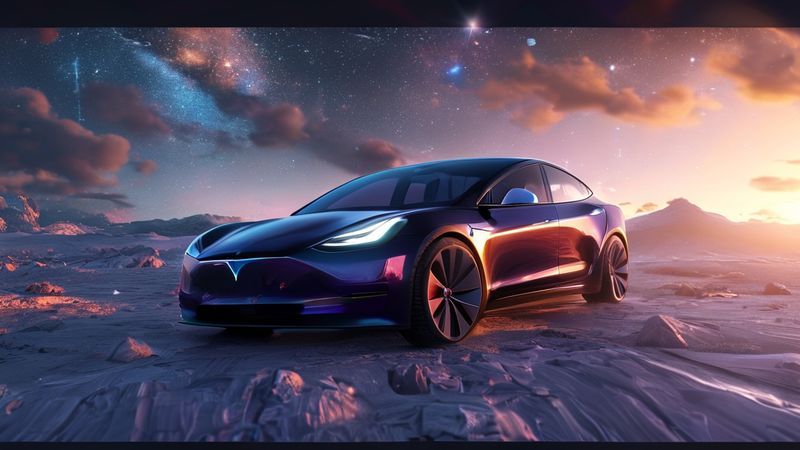
 The rumors surrounding the mythical Tesla Phone Pi continue to electrify the tech world, promising groundbreaking integration with Starlink and innovative solar charging capabilities. If true, these features could redefine smartphone connectivity and sustainability, pushing the boundaries of what a mobile device can achieve.
For years, the tech sphere has buzzed with whispers of a Tesla smartphone – a device not just smart, but revolutionary. Codenamed "Pi" by many enthusiasts, this hypothetical phone embodies the spirit of innovation synonymous with Elon Musk's ventures. While officially unconfirmed, the sheer speculation about its capabilities paints a picture of a device that could seamlessly bridge our digital lives with the broader Tesla ecosystem, from electric vehicles to sustainable energy solutions, all while pushing the envelope on connectivity and power.
At the heart of these fervent discussions are two truly transformative features: direct integration with Starlink's satellite internet service and the inclusion of advanced solar charging technology. These aren't just incremental upgrades; they represent a fundamental shift in how we might interact with our devices, promising global reach without reliance on traditional cell towers and a newfound independence from wall chargers. If the Tesla Pi phone truly materializes with these capabilities, it wouldn't just be another smartphone – it would be a statement, a testament to a future where technology is both omnipresent and environmentally conscious.
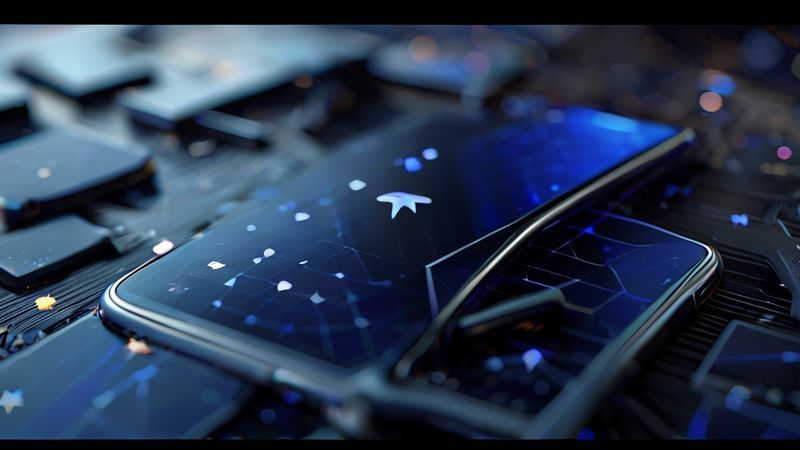
The Starlink Connection: Beyond Terrestrial Limits
Imagine a phone that never loses signal, no matter where you are on the planet – a phone that bypasses the limitations of terrestrial cell towers entirely. This is the promise of Starlink integration. While current smartphones rely on a patchwork of ground-based infrastructure, a Tesla Phone Pi with direct Starlink connectivity would tap into a vast constellation of low-orbit satellites. This would mean seamless, high-speed internet access even in the most remote deserts, oceans, or mountainous regions, transforming communication for adventurers, emergency responders, and anyone living or working outside urban centers. Such a feature would move beyond mere emergency texts, offering full data capabilities and potentially even voice calls independent of traditional carriers, truly democratizing global connectivity.
Powering the Future: Solar Charging on a Smartphone
In a world increasingly focused on sustainability, the rumored solar charging capabilities of the Tesla Pi phone are particularly exciting. While small-scale solar panels on accessories have existed, integrating effective solar charging directly into a smartphone presents significant engineering challenges, primarily related to efficiency and surface area. However, Tesla's deep expertise in solar energy, demonstrated through Solar Roof and Powerwall, suggests they might possess the innovative solutions needed. We could see highly efficient, perhaps even transparent, photovoltaic cells integrated into the phone's display or back panel, offering trickle charging that extends battery life or even provides a significant charge in direct sunlight. This could dramatically reduce reliance on conventional charging, offering unparalleled freedom and a tangible step towards truly sustainable mobile technology.
More Than Just a Phone: The Tesla Ecosystem Integration
Beyond the headline features of Starlink and solar power, the true allure of a Tesla Phone Pi lies in its potential for deep integration within the broader Tesla ecosystem. Imagine a device that acts as your primary key for your Tesla vehicle, offering advanced diagnostics, remote summoning capabilities, and real-time monitoring directly from your pocket. It could interface seamlessly with your Tesla Powerwall, allowing you to manage home energy usage, monitor solar production, and even trade electricity. The phone might also serve as a hub for future Tesla products, potentially even offering a secure and integrated platform for Neuralink applications. This isn't just a phone; it's envisioned as a central control unit for a highly connected, sustainable, and technologically advanced lifestyle, pushing the boundaries of personal tech further than ever before.
